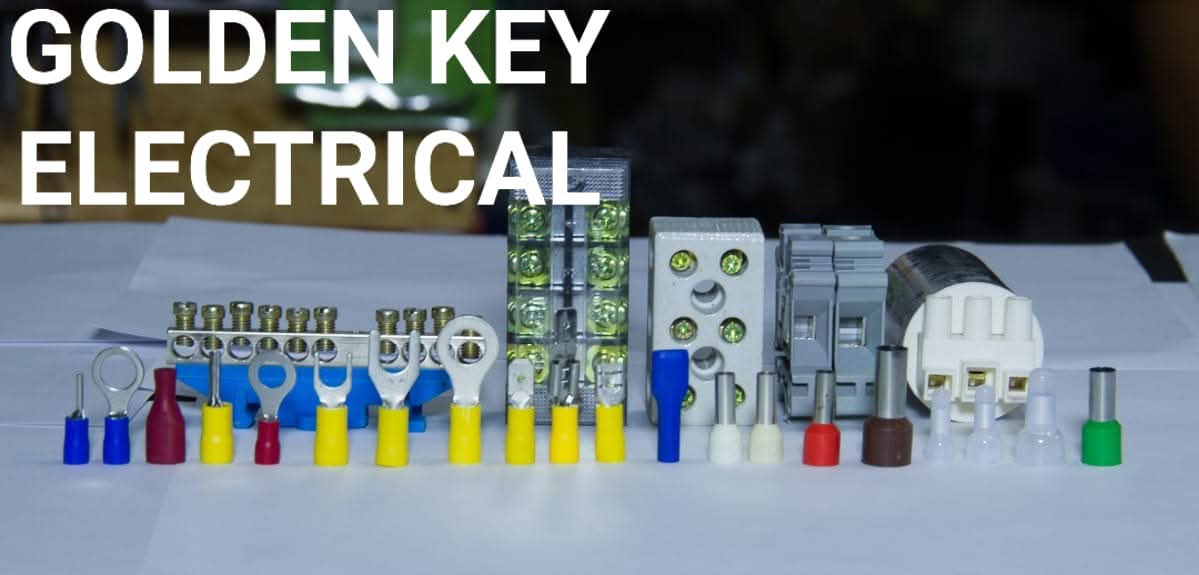
GOLDEN KEY ELECTRICAL & SANITARY WARE TR. LLC

Industrial Area 2 - Sharjah
Products & Services:
Schneider Electric Suppliers In Sharjah, ABB Suppliers In Sharjah, Electrical Companies In Sharjah, More..
Since : 2019
Industrial Area 2 - Sharjah
Products & Services:
Schneider Electric Suppliers In Sharjah, ABB Suppliers In Sharjah, Electrical Companies In Sharjah, More..
Since : 2019


Below is a verified list of suppliers and service providers associated with insulation solutions including SELEX insulation tapes in Sharjah and nearby areas. The list includes authentic business information to help you reach the right business easily.
Golden Key Electrical & Sanitary Ware Tr. LLC
315 – S112, 319 Maleha St, Between Maza and JNP Signal, Industrial Area 2, Sharjah, 33090
Phone number: +971 568 308500
Smart Elemech Trading FZE
SAIF Zone, Q1-06-74C, Sharjah, UAE
Phone number: +971 6 7043799
PHOE Electricals Trading LLC
Sharjah Media City, Sharjah, UAE
Phone number: +971 55 7842929
Phone number: +971 58 8339415
Al Baraq Electrical Ware Trading
Shed No. L11, Industrial Area 12, Sharjah, UAE
Phone number: from ATN listing
Atlas Al Sharq Trading Est. LLC
Sharjah Industrial Area 1, Sharjah, UAE
Phone number: from ABB-Sharjah distributor listing
Apex Global Solutions LLC
Sharjah, UAE
Phone number: via ATN / distributor listing
Bab Al Qamar Electrical & Sanitary LLC
Al Guwair Electrical Market, Sharjah, UAE
Phone number: listed under ABB distributor listing
Everest Electrical & Mechanical Equipment Trading LLC
Shed 1, Industrial Area 13, University Road, Sharjah, UAE
Phone number: via ABB-Sharjah distributor listing
Electronic Control Industries LLC
S 102, Industrial Area 15, Sharjah, UAE
Phone number: via ABB distributor listing
KGC Electricals
Sharjah (UAE-wide distributor)
Phone number: via KGC ABB page
Townin.com has compiled this list of trusted ABB electrical suppliers in Sharjah, based on business directory data and publicly available distributor information.
Insulation plays a critical role in maintaining energy efficiency, preventing heat loss, and ensuring the smooth operation of various systems, including HVAC systems. In industries and commercial spaces, chiller lines are among the most important components that require regular insulation to ensure optimal performance. Proper insulation helps in reducing energy consumption, preventing condensation, and extending the life of the equipment.
Chiller lines are responsible for carrying chilled water or refrigerant between the chiller and air-handling units (AHUs). Over time, insulation may deteriorate due to factors such as moisture, mechanical damage, or wear and tear. Poor insulation can lead to energy losses, reduced cooling efficiency, and higher operational costs. Thus, chiller line rectification and re-insulation works are essential to restore and maintain the efficiency of the chiller system.
Chiller systems are essential for industrial and commercial applications to provide cooling for equipment, processes, and spaces. Over time, the chiller lines may develop issues that affect their performance. Chiller line rectification is the process of diagnosing, repairing, and restoring the efficiency of chiller systems. Here’s an overview of the chiller line rectification process:
The rectification process begins with a thorough inspection of the entire chiller system. This step involves checking for any visible issues such as leaks, corrosion, or blockages in the chiller lines. Specialized diagnostic tools are used to measure the system's performance, identify pressure drops, and detect refrigerant or coolant leaks.
Key Tasks:
Leaks in chiller lines can lead to refrigerant loss, reduced cooling efficiency, and system failures. Once a leak is detected, the rectification team seals the leak using appropriate techniques, such as welding, brazing, or using sealants.
Key Tasks:
Chiller lines often accumulate debris, sludge, and contaminants over time, which can lead to blockages and reduced system efficiency. Cleaning the lines is a crucial part of rectification.
Key Tasks:
Proper insulation is essential to maintain the efficiency of the chiller system. During rectification, damaged or worn-out insulation is replaced, and the chiller lines are re-insulated to prevent heat gain and condensation.
Key Tasks:
After repairs and cleaning, the chiller lines need to be tested for pressure and flow consistency. This step ensures that the system operates optimally without any further leaks or pressure losses.
Key Tasks:
After rectification, the system is carefully restarted, and its performance is monitored to ensure everything is working as expected. This includes checking the chiller’s cooling capacity, energy efficiency, and overall system stability.
Key Tasks:
Re-insulation is a process of upgrading or replacing old insulation to improve energy efficiency, comfort, and reduce energy bills. Here's a step-by-step guide to re-insulating your home or building:
Q1. Why
is chiller line insulation necessary?
A1. Chiller line insulation is
necessary to prevent energy loss, maintain cooling efficiency, and avoid
condensation, which can lead to corrosion and damage to surrounding equipment.
Q2. What
are the signs that chiller line insulation needs to be replaced?
A2. Some signs include visible wear
and tear on the insulation, increased energy consumption, condensation buildup,
and reduced cooling efficiency. If the insulation appears wet, saggy, or
damaged, it may need to be replaced.
Q3. What
is the best material for insulating chiller lines?
A3. The best material depends on the
application and operating temperature. Common materials include fiberglass for
high-temperature systems, elastomeric foam for flexibility and moisture
resistance, and polyethylene foam for lightweight applications.
Q4. How
often should chiller line insulation be inspected?
A4. Regular inspection should be
conducted at least once a year, or more frequently in harsh environments.
Inspections help detect early signs of damage or deterioration before they
affect system performance.
Q5. How
long does re-insulation work typically take?
A5. The duration of re-insulation
depends on the scope of the project and the condition of the chiller lines.
Smaller projects may take a few days, while more extensive works could require
several weeks.
Q6. What
is the expected lifespan of chiller line insulation?
A6. With proper maintenance and
care, chiller line insulation can last between 5 to 10 years, depending on the
material and environmental factors. Regular inspections can help extend the
insulation's lifespan.
Q7. What
is the difference between rectification and re-insulation?
A7. Rectification refers to the
repair and restoration of damaged insulation sections without fully replacing
it. Re-insulation involves removing the old insulation entirely and replacing
it with new materials.
Q8. Can I
perform chiller line rectification and re-insulation myself?
A8. It is not recommended to perform
these works yourself, as it requires specialized knowledge and experience.
Hiring professional insulation contractors ensures the work is done safely and
efficiently.

Sharjah, Industrial Area 2
Sharjah, Industrial Area 2
Latest Customer Reviews
"Best electrical suppliers in Sharjah"